A source-backed buyer and seller guide to First Colony in Sugar Land, Texas, covering its location, many named sections, traditional and Colonial homes, townhomes, lakes, greenbelts, golf, parks, association structure, everyday life, schools and the practical checks that matter for an address-specific decision.
Neighborhood guide · Sugar Land, Texas
First Colony is a large master-planned community in the heart of Sugar Land, Texas. It is made up of many named sections, several association structures, and homes built from the late 1970s through the 2000s. The community is laid out around lakes, greenbelts, golf, parks, tree-lined streets and a network of everyday destinations. A buyer is not choosing one uniform neighborhood. A buyer is choosing a section, a home type, a location and a set of rules that may be different from the section next door.
First Colony works best when you compare it section by section. Start with the address and housing type, then check the association, tax components, flood map, insurance, exact school assignment and current comparable sales. The larger community gives you a shared setting; the smaller section determines much of the day-to-day ownership experience.
First Colony at a glance
First Colony is a large master-planned community in Sugar Land, Fort Bend County. The Hines project page describes a 9,700-acre development at the intersection of U.S. 59 and Highway 6, with homes, townhomes, apartments, condominiums, retail, offices, schools, churches, parks, lakes and a country club. The exact number of homes and the boundaries used by a map, a postal address and a city limit can differ. Treat First Colony as a community name and a planning area, not as a promise that every nearby address has the same rules.
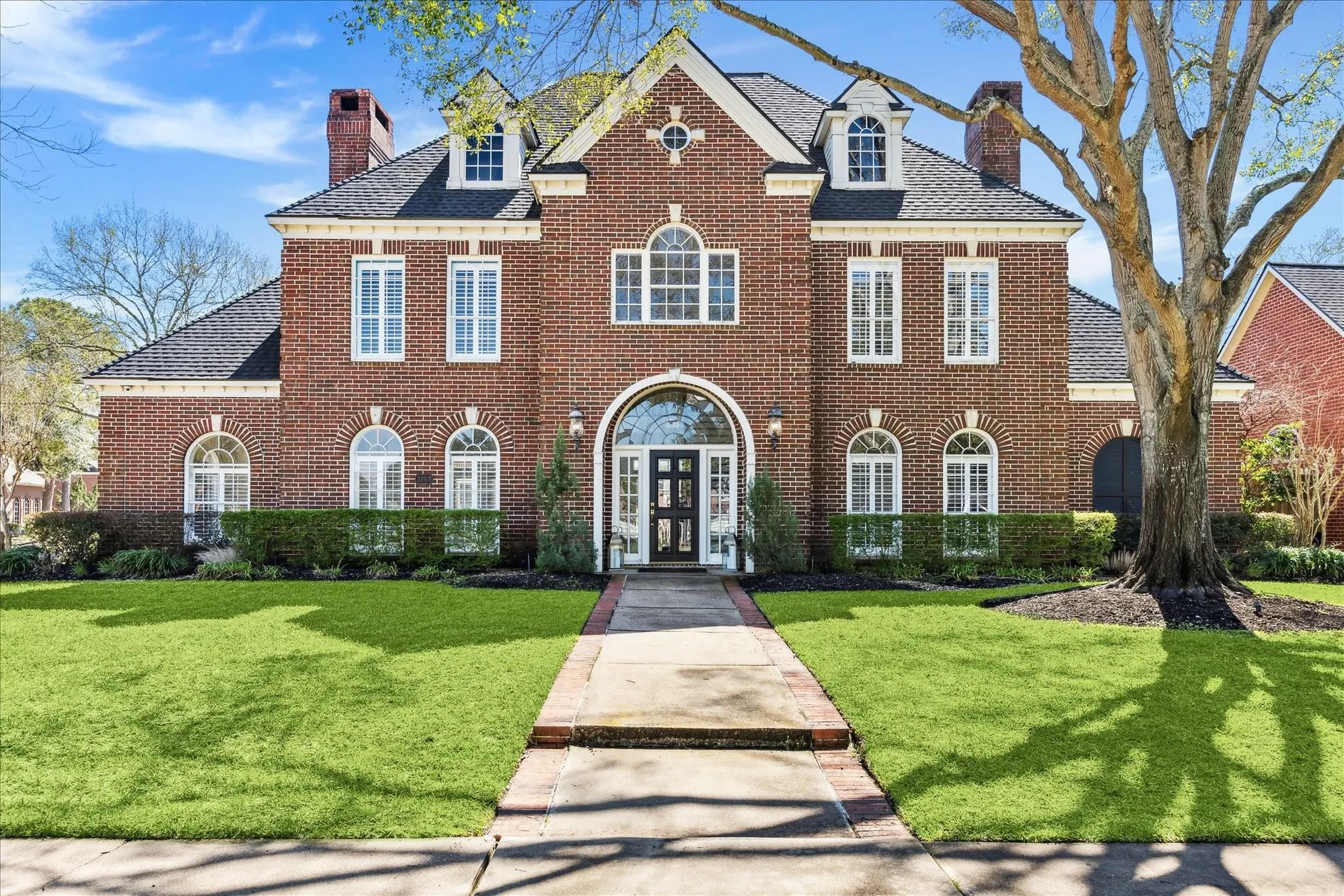
The approved onboarding description for this guide places the housing mainly in the traditional and Colonial styles from the late 1970s through the 2000s, with townhomes also present. That long building period is important. Some sections have older trees and older systems; others were added later. Some sections are close to a lake, trail, park or golf landscape; others are organized around a quiet internal street. Price, lot size, updates, location and association obligations can therefore vary widely even when the address begins with the same community name.
Sugar Land annexed the remaining First Colony municipal utility districts, or MUDs, in 1997. A MUD is a special local government district that can help pay for water, sewer and other infrastructure. That history helps explain why taxes and public services should be checked at the exact address instead of assumed from a neighborhood-level description. The First Colony Community Services Association neighborhood list also marks some sections as being in Missouri City. A Sugar Land mailing address does not, by itself, prove that every property is inside the Sugar Land city limits.
Where First Colony sits
Use the intersection of U.S. 59/I-69 and Highway 6 as the first orientation point. Hines places First Colony at that interchange and gives about 22 miles to downtown Houston as project context. That distance is not a drive-time promise. Traffic, the exact section, the time of day and the route you take can change the trip. Check a route from the specific address when you are deciding what a normal day would feel like.
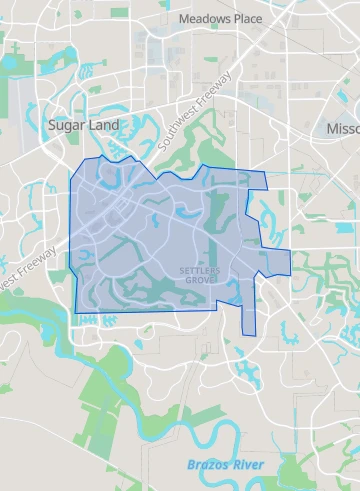
- Shaded area: the First Colony boundary shown by HAR.
- Nearby labels: Sugar Land, Meadows Place, Missouri City and the Southwest Freeway help you orient the map.
- Green and blue areas: parks, water and drainage corridors show why lakes and greenbelts are part of the community's shape.
- Nearby destination: a place close to the boundary is not automatically inside First Colony or inside Sugar Land.
Before you compare two listings, write down four address-level checks: municipal jurisdiction, postal ZIP code, flood-zone map and the exact school locator result. Then check the route to work at the time you would normally travel. This small list prevents a broad community description from becoming a false promise about taxes, schools or commute time.
- Hines: First Colony location and project description
- Sugar Land history and regional context
- HAR: First Colony boundary and overview
What makes the community different
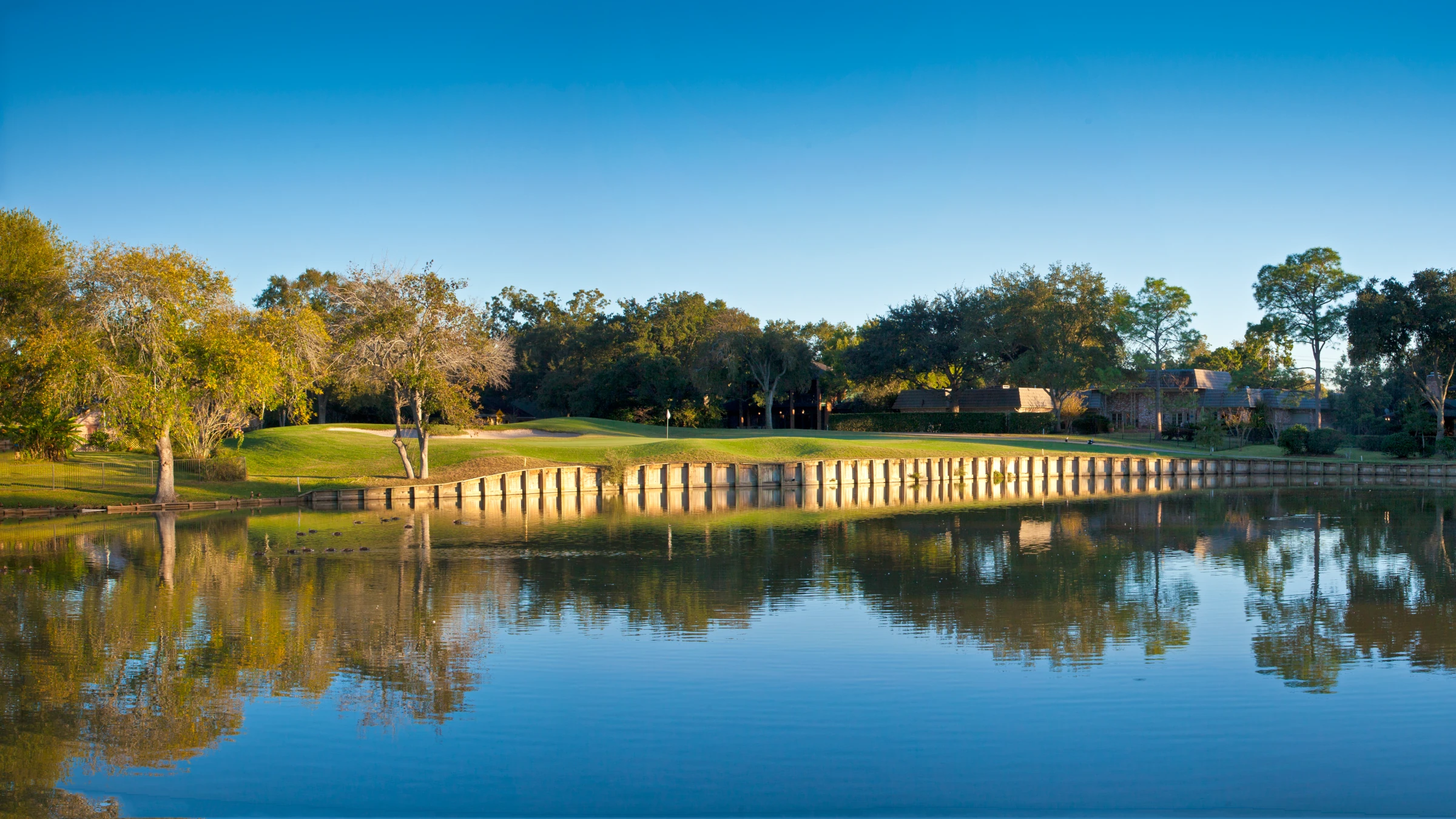
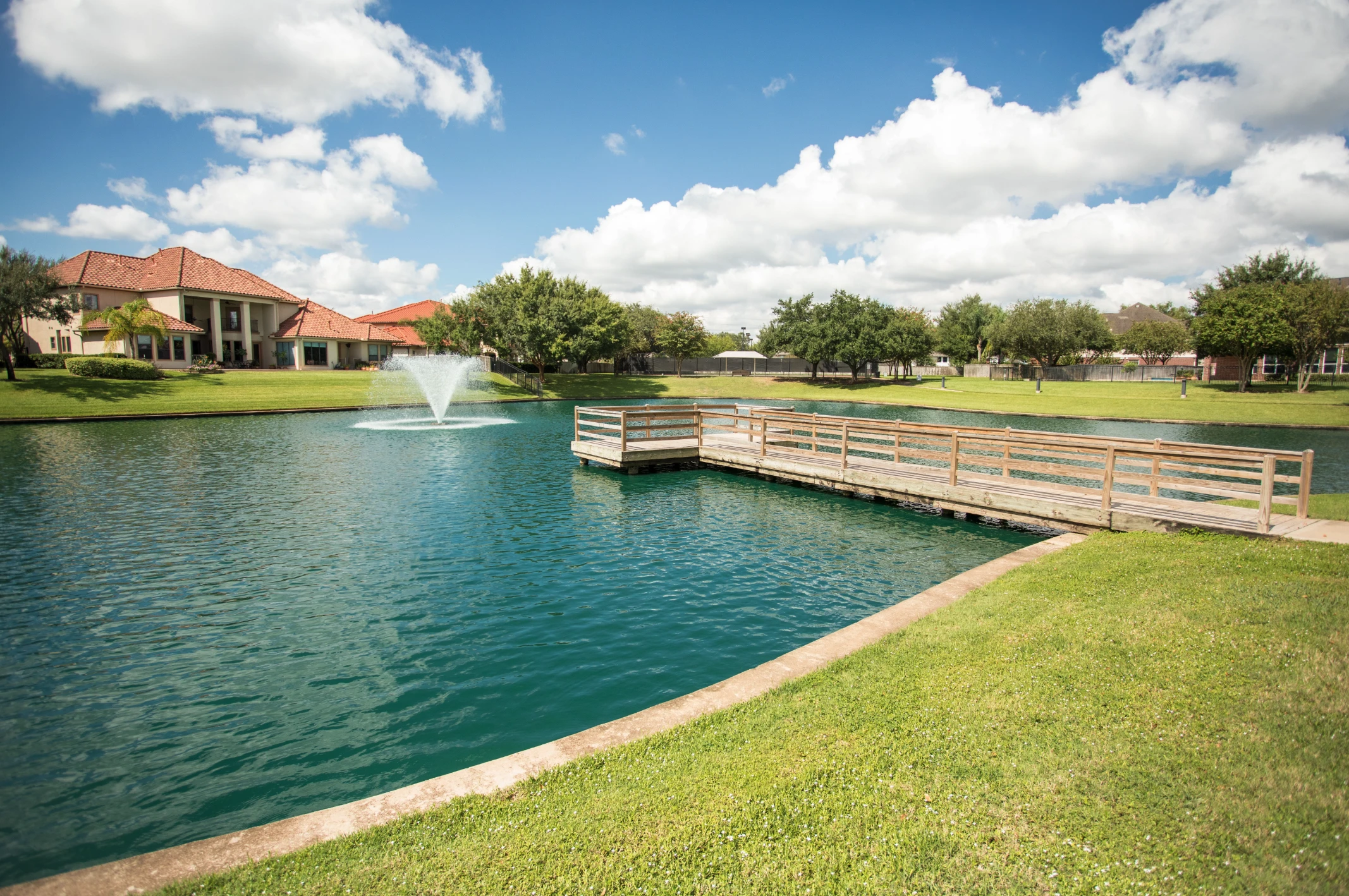
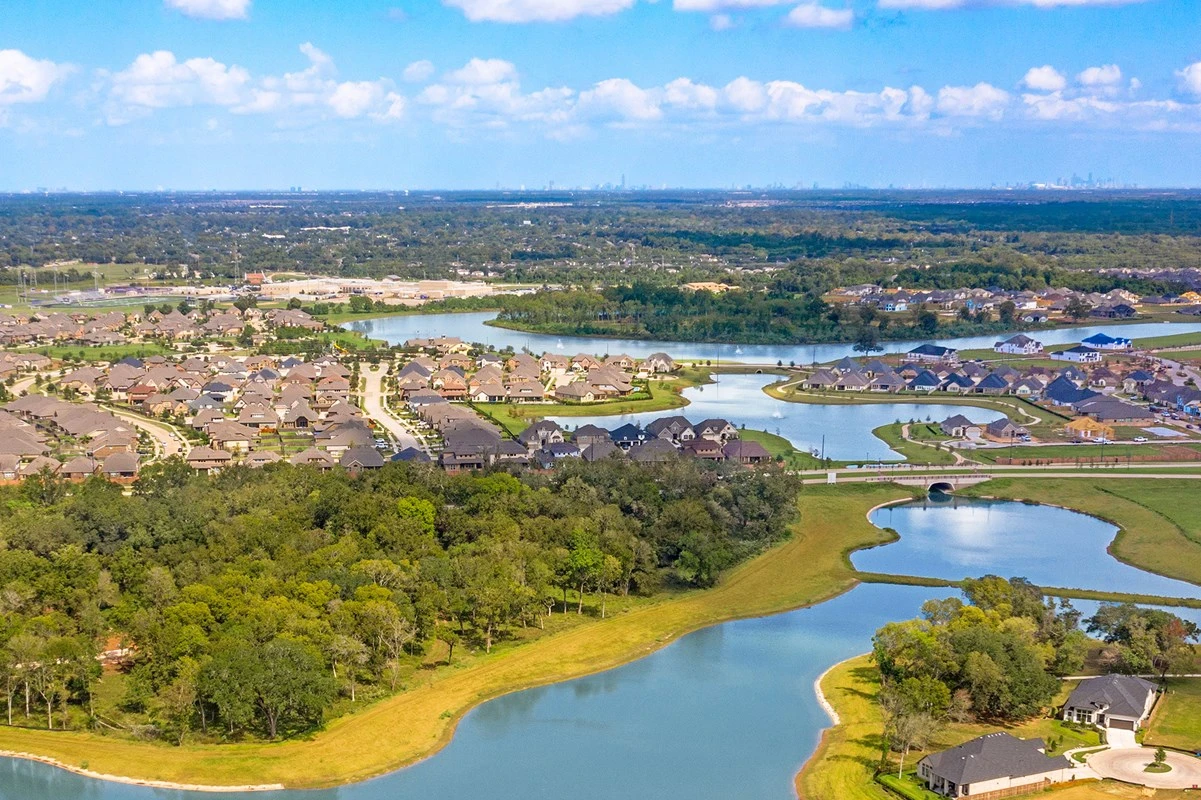
The first thing many people notice is the planning. Streets, entrances, lakes, greenbelts, parks and neighborhood amenities were designed as parts of a larger landscape rather than as isolated subdivisions. The city's historical account of the development says the plan included formal landscaping, extensive greenbelts, a golf course and country club, lakes, boulevards, neighborhood amenities and shopping. That planned setting is a real part of daily life: it shapes where you walk, where you see water or open space, and how the different sections fit together.
The second thing to notice is variety. The community contains traditional and Colonial single-family homes, townhomes, condominiums and apartments. The official FCCSA list includes sections such as Alcorn Bend, Austin Meadow, Colony Meadows, Lakefield, Lake Pointe, Sweetwater, Plantation Bend, Riverbend and Woodstream, plus townhome areas such as Grants Lake and Sweetwater. These are examples, not a complete ranking. A section name tells you where to begin your due diligence; it does not tell you the current condition, tax bill, school assignment or association cost of a specific home.
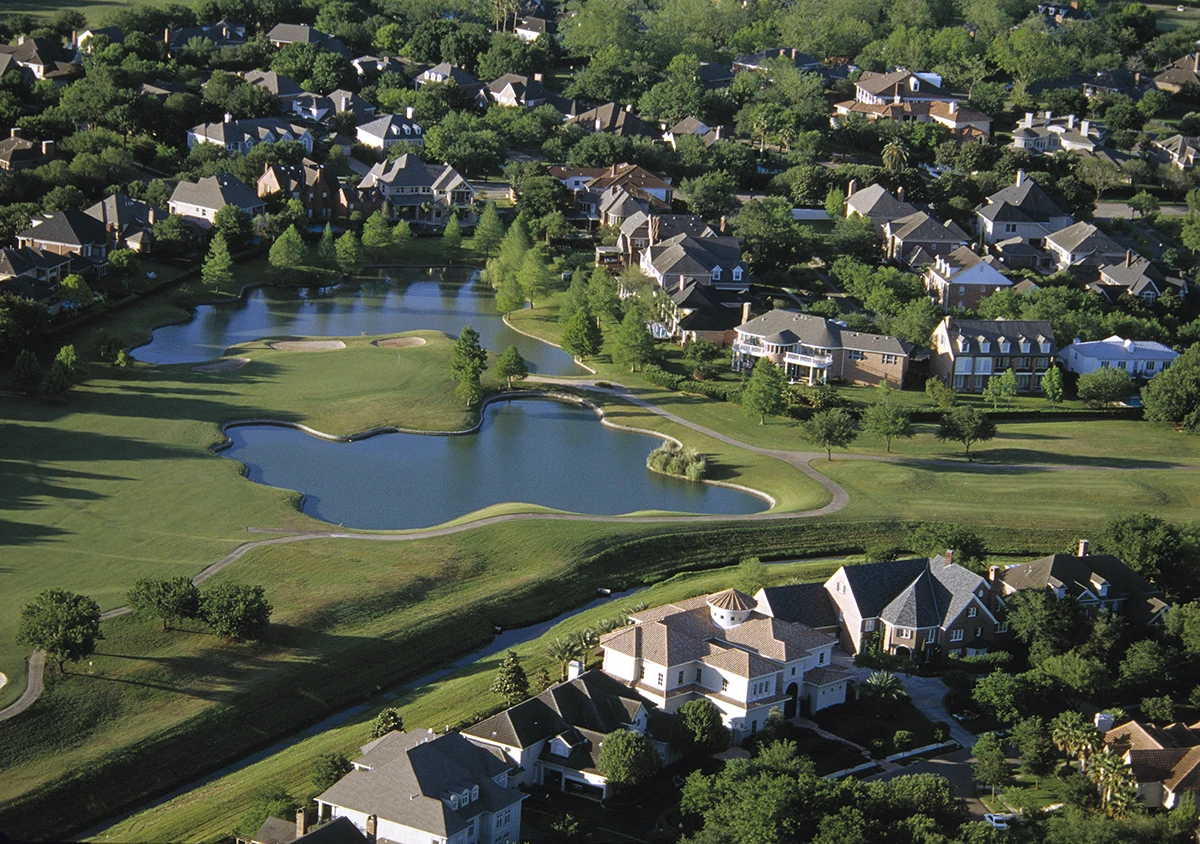
The planned setting also has a practical side. A lake view, a trail, a park or a golf-course edge may improve how a home feels, but it can also bring questions about access, maintenance, drainage, insurance and the rules for boats, fences, landscaping or additions. Ask which features belong to the property, which are shared, which are public and which require a separate membership. Proximity to a club or course does not mean that club membership is included.
How First Colony developed
First Colony grew from a very large land sale. The City of Sugar Land's historical document says Gerald Hines interests bought a large tract in the early 1970s and that Sugarland Properties Inc. began development in 1977. Hines describes the project as a 9,700-acre master-planned community. The development continued over roughly three decades, which is why the housing mix spans multiple eras rather than one building boom.
The original plan was not only houses. It included segmented neighborhoods, formal landscaping, greenbelts, a golf course and country club, lakes, boulevards, neighborhood amenities and shopping. First Colony Mall opened in 1996, and Sugar Land Town Square later used one of the remaining parcels. These landmarks help explain why the community feels central even though the sections themselves are spread across a large area.
The city annexed the remaining First Colony MUDs in 1997. That history is useful for a buyer because it explains why the area has several layers: city services, special districts, community association rules and section-specific amendments. It also explains why a seller should document the address and association carefully instead of relying on the broad name “First Colony.”
For a buyer, history shows up as a practical question: how old is the roof, HVAC system, water heater, electrical panel, plumbing and exterior? For a seller, history becomes part of the story: what has been updated, what work was permitted, what maintenance remains and which section rules apply? Older age does not automatically mean poor condition, but it does mean the inspection and disclosure conversation matters.
- City of Sugar Land: Kempner family and master-planned development
- Sugar Land: First Colony development and 1997 annexation
- Hines: First Colony project overview
Homes and meaningful smaller areas
The right way to shop First Colony is to separate the umbrella community from the section. The larger community gives you a shared address, planned landscape and a set of nearby destinations. The section can change the home vintage, lot, street pattern, association, access rules and the set of comparable sales you should study.
| Choice | What can vary | What a buyer should ask | What a seller should document |
|---|---|---|---|
| Early single-family section | Build date, original systems, mature trees, lot shape and updates. | Roof, HVAC, electrical, plumbing, drainage and permitted work. | Age of major systems, repair records, permits and current condition. |
| Later single-family section | Plan, lot, location, updates and the section's own rules. | What is shared, what is private and what changes are allowed? | Association approvals, exterior work, landscaping and any restrictions. |
| Lake, greenbelt or golf-adjacent section | View, trail or water access, drainage, maintenance and insurance questions. | Is the feature public, association-owned or private to the lot? | Water or view disclosures, insurance history and common-area responsibility. |
| Townhome or condo section | Exterior responsibility, parking, storage, rules and a separate association. | What does the association maintain, and what is the owner responsible for? | Association documents, approvals, assessments and the exact insurance split. |
When you’re ready to make an offer or set a listing price, ask for a current market analysis for that section.
The FCCSA neighborhood page makes the association structure clear. FCCSA is the largest of several associations in First Colony. Early neighborhoods began as separate homeowner associations; later neighborhoods were added to FCCSA. When a person accepts the deed to an FCCSA property, that person becomes a member. Townhome and condominium neighborhoods can belong to FCCSA and also have a separate association for their own needs.
The same page lists areas in and around First Colony that are not part of FCCSA, including Avalon, Commonwealth, Chimneystone, Colony Village and the Highlands, Settlers Grove and Settlers Park, Sugarwood and First Colony Mall. Some FCCSA-listed sections are marked Missouri City. This is why “First Colony” should be a starting point for research, not the final answer to jurisdiction, dues, amenities or school assignment.
- FCCSA: neighborhoods and association structure
- FCCSA: governing documents and section-specific guidelines
Everyday life: parks, lakes and local conveniences
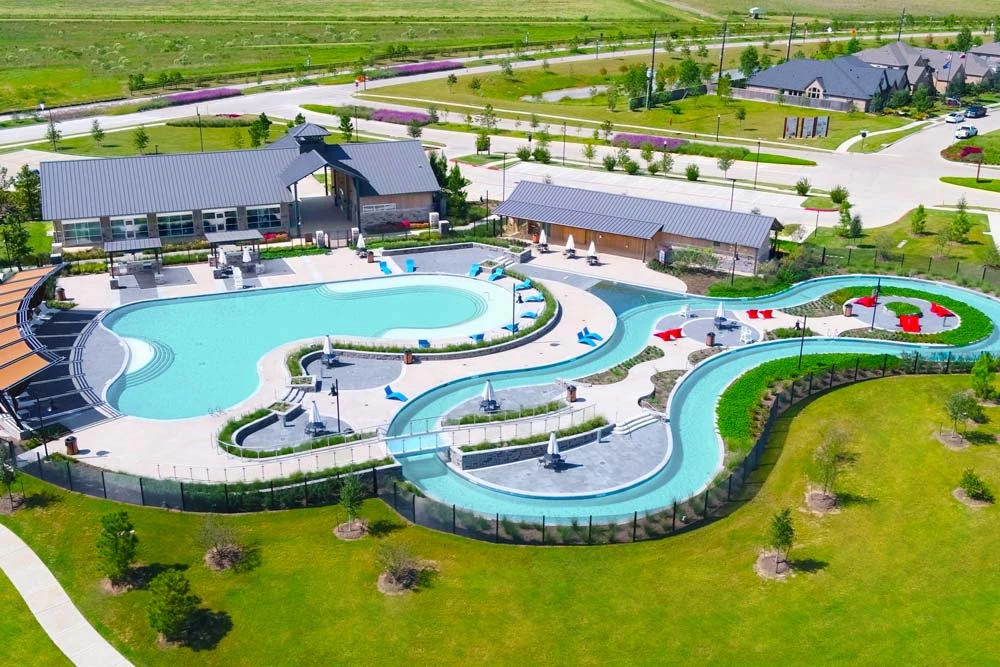
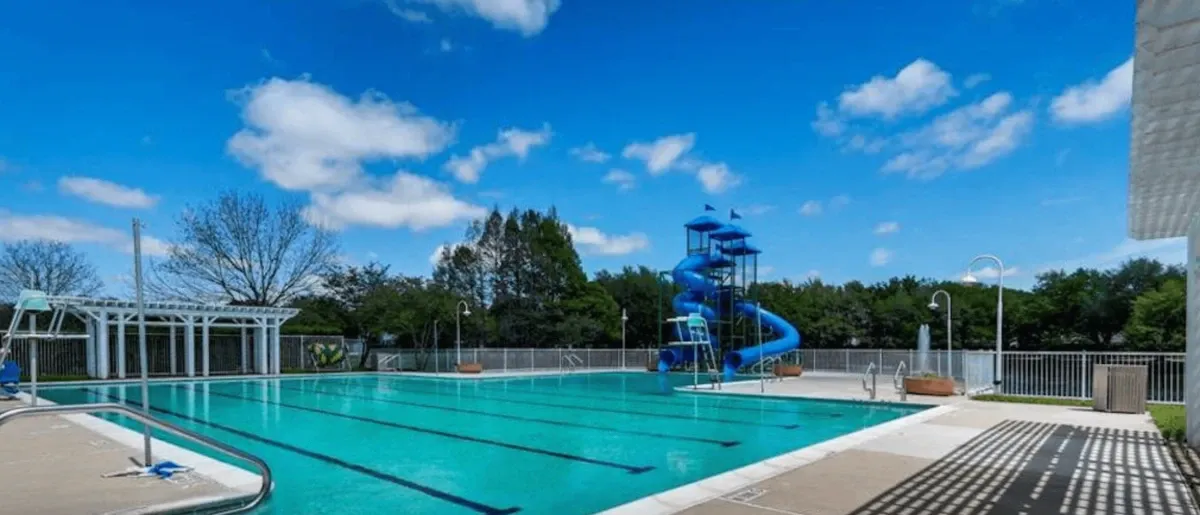
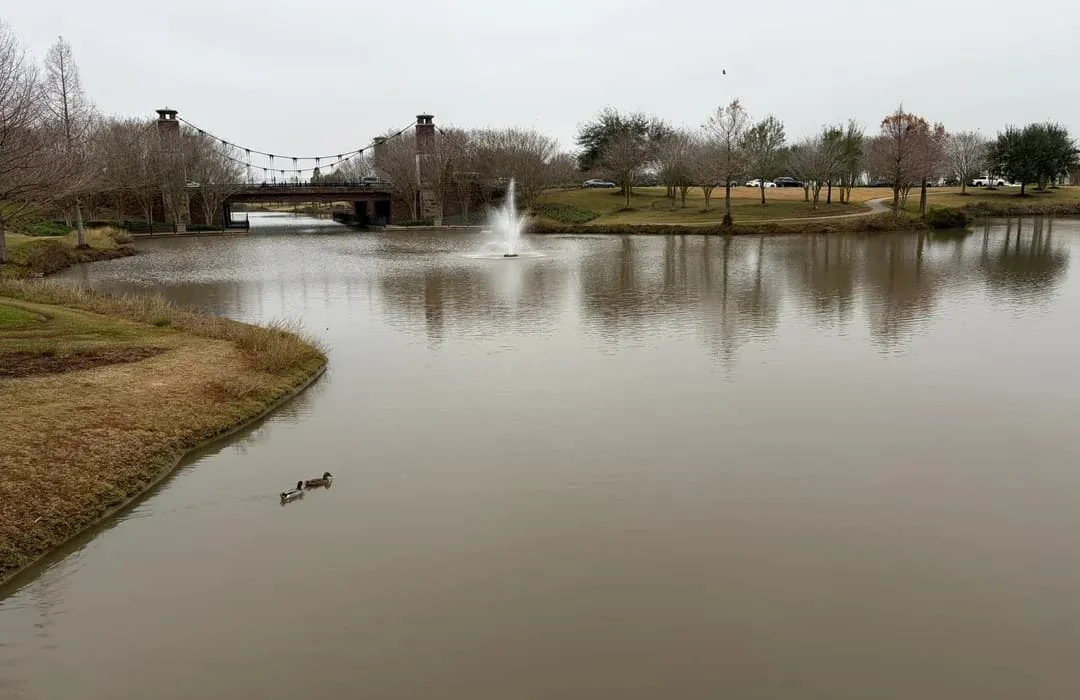
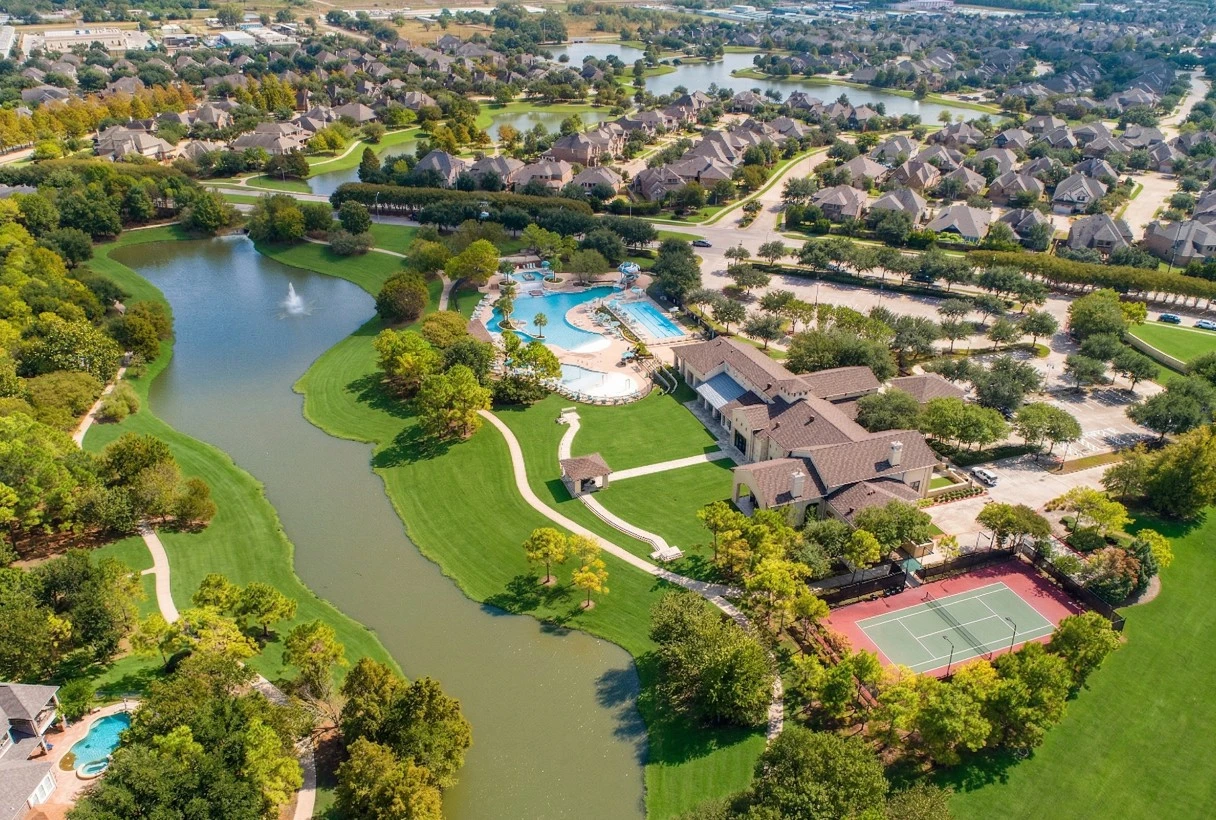
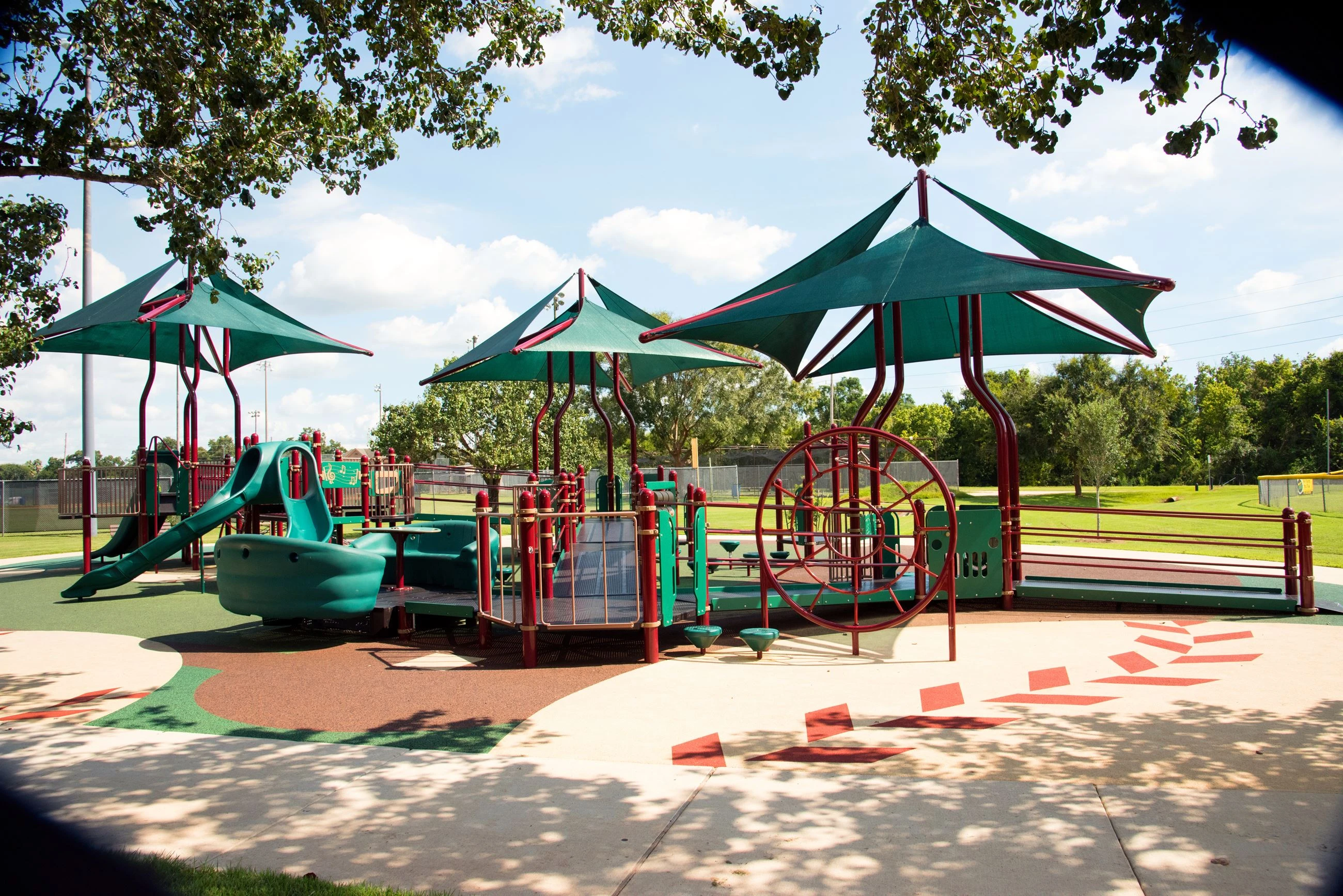
Everyday life in First Colony is shaped by both association amenities and public city facilities. The FCCSA amenities page lists an Aquatic Center, neighborhood pools, tennis and pickleball courts, the Heritage Colony Clubhouse, the Oyster Creek Boathouse, parks and trails. It also lists a 23-acre lake at the Aquatic Center, disc golf, bocce courts, sand volleyball, picnic areas and fishing in common areas. Non-motorized boats are permitted on the association lakes under the published rules.
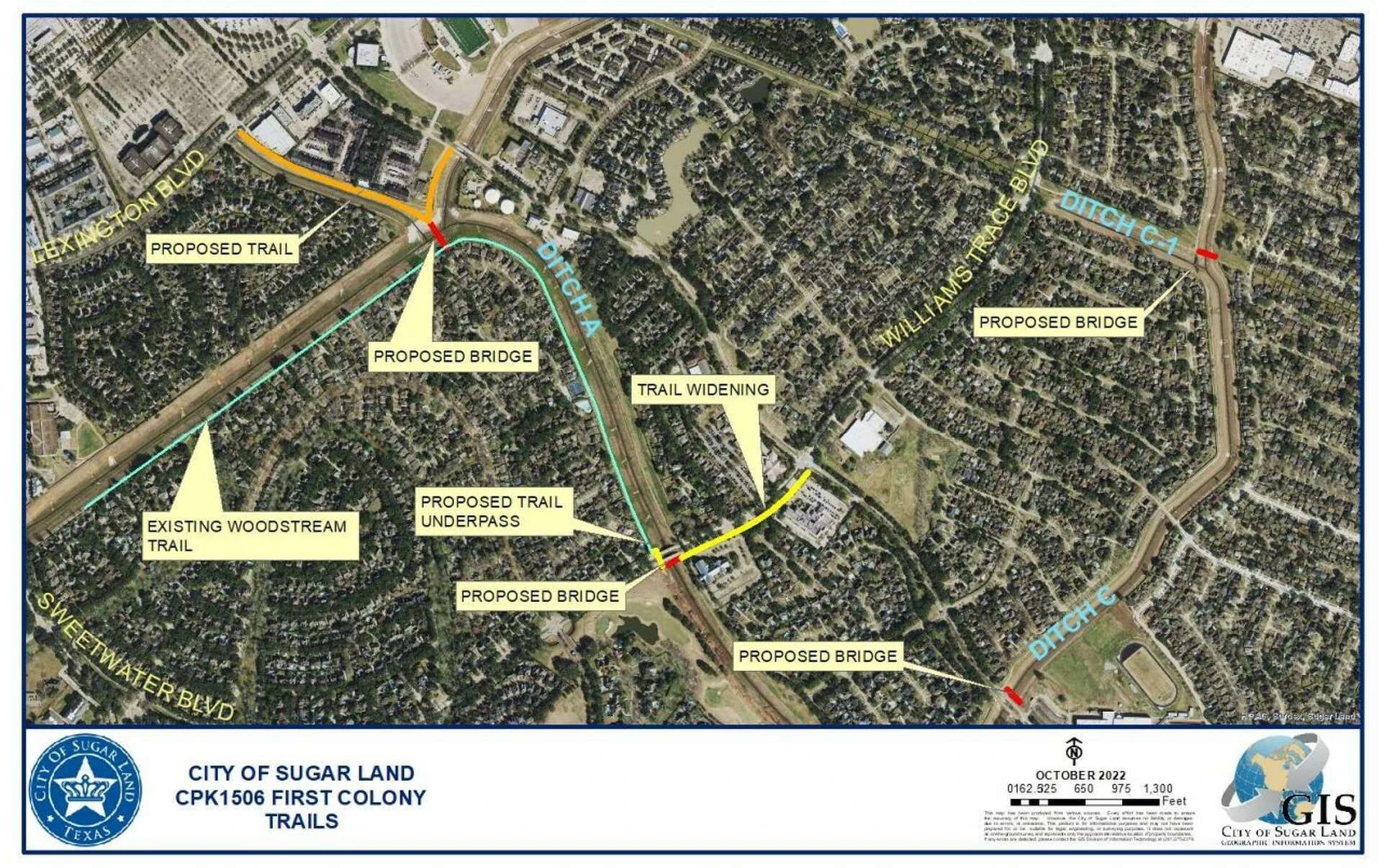
Access matters. FCCSA pools are for residents and guests, with registration and access rules. Tennis and pickleball courts use keys and a reservation system. The boathouse is seasonal. These details can change, so check the current FCCSA pages before promising yourself a particular hour, pass or activity. Public city parks are a different category: the City of Sugar Land says it maintains 27 parks, 3 special-use facilities and more than 35 miles of hike and bike trails across the city, including First Colony Park as a community park.
For errands and weekends, the area around First Colony includes First Colony Mall, Sugar Land Town Square, restaurants, retail, professional offices, the First Colony Branch Library, Oyster Creek Park and the Smart Financial Centre. The exact distance from your front door will depend on the section. Check the route, the parking situation and the hours for the places you expect to use often.
- FCCSA: pools, courts, boathouse, parks and trails
- City of Sugar Land: parks, trails and First Colony Park
- HAR: nearby places and community overview
What ownership involves
The less obvious work of owning here is not one rule. It is a stack of address-specific questions. Start with the association. FCCSA publishes covenants, bylaws, rules, design standards, supplemental amendments for individual neighborhoods, development guidelines and policies covering things such as roofing, painting, street and yard trees, demolition, reconstruction, signs and exterior changes. A townhome or condo may have an additional association with a different maintenance split.
Ask for the current governing documents and resale information early. Find out which exterior elements the owner maintains, which elements the association maintains, what needs approval before work begins, and whether the section has extra rules or extra services. Do not assume that a rule in one section applies in another. The FCCSA list itself distinguishes association neighborhoods from nearby neighborhoods with their own associations.
Taxes also need an exact-address check. A property tax bill can include more than one taxing component. Ask the title company, the Fort Bend Central Appraisal District and the relevant taxing entities for the current figures. Do not use a community-wide tax estimate as a monthly payment promise.
Water is part of the landscape, so flood and insurance questions belong in the same early conversation. Lakes, greenbelts and drainage corridors do not prove that a property is in a flood zone, and a map label does not replace an insurance quote. Use the exact address in the FEMA Flood Map Service Center, ask about drainage history and obtain a current insurance quote before you commit.
A simple ownership checklist
- Read the association documents for the exact section, not just the First Colony overview.
- Confirm whether the property is in FCCSA, a separate association or both.
- Ask what exterior, roof, tree, parking, rental and sign rules apply.
- Check current taxes and the tax components with official sources.
- Use the exact address for flood-zone, insurance and school checks.
- Inspect age-related systems and document permitted repairs.
Schools and address-specific checks
First Colony is in the Fort Bend Independent School District, but a community-wide school claim is not enough. School attendance follows the address. Fort Bend ISD's 2026-2027 school locator asks for the house address, and the district says final student placement is determined by the campus registrar. The district also describes its maps as guides and asks people near a boundary to verify attendance with the district.
This matters more than usual right now because the district has approved 2026-2027 boundary changes, closures and the opening of a new middle school. Older articles may list schools that served a section in the past. Use those lists as historical examples only. Enter the exact address in the current locator before you make an offer, and recheck it if you are buying a home near a boundary line.
Schools associated with First Colony include Colony Bend Elementary, Colony Meadows Elementary, Settlers Way Elementary, Fort Settlement Middle School, Dulles High School and Clements High School. Feeder patterns vary by section, so check the current district locator for the exact address.
- Fort Bend ISD: 2026-2027 School Locator
- Fort Bend ISD: district maps, feeders and boundary verification
Buying and selling here
For a buyer, the useful sequence is simple: choose a section and housing type, then verify the address, then compare homes. A lower price in one section may reflect a different age, lot, update level, association structure or location. A higher price may reflect a different plan, view, size or condition. Neither number means anything until you know what is being compared.
A seller should also prepare for questions that naturally arise in an established community: the age of major systems, permitted work, roof and exterior condition, tree or drainage maintenance, association approvals, rental rules and any special assessment or fee disclosed by the association. Date every document and market figure. A market statement that was true when written can become stale.
This guide intentionally does not include a current price chart, school ratings, HOA fee amount, commute time or sales total. Those facts change, and the assignment does not support inventing them. When you are ready, request a current section-specific market analysis and use the official links above for the facts that must be checked against the exact address.
Bring a specific address
If you are comparing two First Colony sections, bring both addresses. We can use them to organize the questions that matter: jurisdiction, association, school locator, flood map, taxes, insurance, condition and current comparable sales.
Frequently asked questions
Is First Colony one neighborhood or several?
It is one large master-planned community made of many named sections. Sections can differ in age, price level, housing type, association, amenities, jurisdiction and school assignment. Treat the section as part of the property description.
Is every First Colony address inside Sugar Land?
No. The FCCSA neighborhood list marks some sections as Missouri City, and a postal address does not settle municipal jurisdiction. Verify the exact property address with official city or county sources.
What housing types are available?
The approved description includes traditional and Colonial single-family homes from the late 1970s through the 2000s plus townhomes. The official FCCSA list also includes condominium and apartment areas. Check the exact section for its own rules and association structure.
Are lakes, pools, trails and golf included with every home?
Not in the same way. Some facilities are association amenities with resident access rules, some parks are public, and a golf club is private. Confirm what is shared, what is public, what requires registration and what requires a separate membership.
How do I check schools?
Enter the exact house address in the Fort Bend ISD school locator. Use current district maps, not an old community-wide list, and ask the district to verify an address near a boundary.
How should I compare sections and prices?
Compare the same things in each section: build date, plan, lot, condition, location, association obligations, taxes, insurance, flood map and current comparable sales. Ask for a current analysis instead of relying on a community-wide average.
What should a seller document?
Record the section and association, provide current resale and governing documents, list permitted work and major system ages, explain exterior maintenance, and disclose anything that affects use of a lake, trail, park or shared facility.
Next step
First Colony offers a lot of choice, but the choice is local. Start with the section and the address. Then check the association, jurisdiction, school locator, flood map, taxes, insurance, condition and current comparable sales. That process turns a broad community name into a decision you can explain.
If you are planning to buy or sell in First Colony, bring the addresses you are considering and the questions that matter most to you. Sonia Noman can help organize the next conversation around the property and the current information for that exact location.