This guide explains how Telfair’s lake-and-trail master plan shapes daily life, what kinds of homes and numbered sections the community contains, and how to verify FBISD schools, MUD districts, HOA rules and flood information for a specific Sugar Land address.
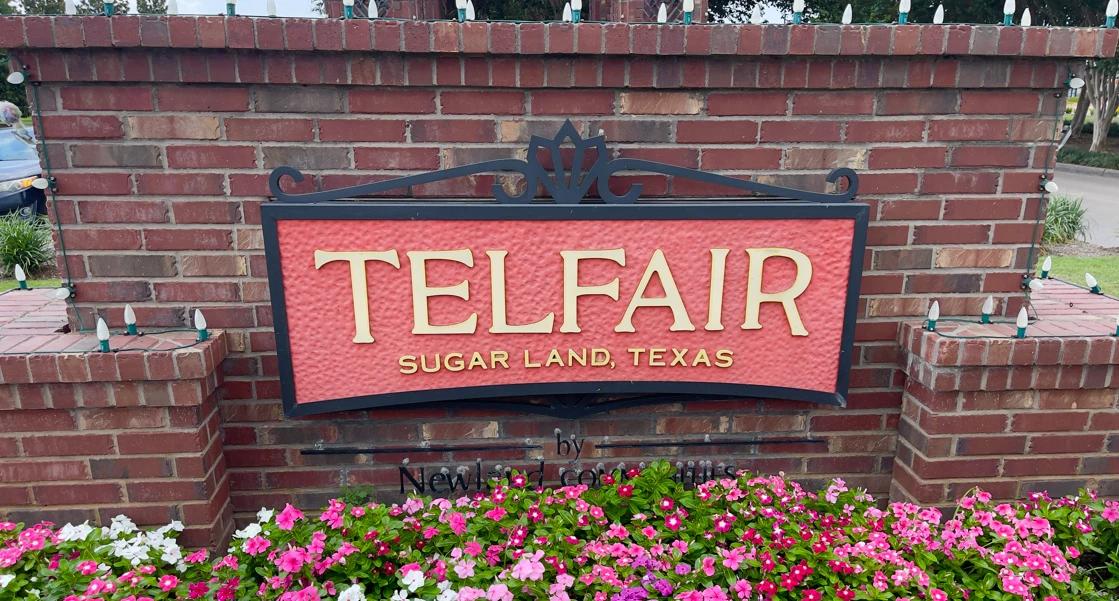
Telfair is a master-planned community in Sugar Land, Texas, in Fort Bend County. Its homes sit around a connected system of lakes, paths, parks and recreation spaces near University Boulevard and Interstate 69 / U.S. Highway 59. This guide explains how the community is designed, what kinds of homes it includes, why addresses can fall into different sections, and what a buyer should check before making an offer.
Telfair is a good fit for someone who values an internal trail and lake network, shared recreation spaces and several home formats. It is not one single legal or residential product. Numbered subdivisions, related planned developments, school attendance zones and Municipal Utility Districts can differ by address. Treat the neighborhood name as the starting point, then verify the full property address.
Where Telfair is and how to read the map
Telfair is in the southwest Houston area, inside Sugar Land’s city limits. The main orientation roads are University Boulevard on the south side and I-69 / U.S. 59 on the east. State Highway 6 is part of the wider Sugar Land road network farther east. These roads help with orientation, but none of them should be treated as the exact legal edge of every Telfair property.
The residential area, the commercial strips near the freeway and nearby destinations are three different things. The University of Houston at Sugar Land, the Houston Museum of Natural Science at Sugar Land, Smart Financial Centre and Sugar Land Town Square can all be useful reference points. Only some of them are inside Telfair.
How to read the map
Telfair’s residential area sits west of I-69/U.S. 59 and along University Boulevard. The diagram shows orientation, not a legal boundary. State Highway 6 is regional road context, not the edge of the neighborhood.
Inside versus nearby
Blue points mark places at or inside the Telfair area. Orange points mark useful destinations outside it. Always check the exact address and city map when a boundary matters.
Why published acreage figures differ
Acreage numbers for Telfair are easy to misuse. One description of the residential portion calls Telfair a 750-acre community. The Telfair Community Association describes 2,018 acres. The developer’s page lists 2,019 total acres, then separates 375 acres of mixed and commercial use from 790 acres of open space.
These figures are not automatically wrong. They may be counting different things: a residential portion, the full master plan, or land that includes commercial and open-space uses. The safest statement is that Telfair is a large, multi-section master plan whose published size depends on the boundary and land categories being counted. Ask which scope a source uses before comparing it with another community.
For a property-specific zoning check, use the City of Sugar Land’s official planning maps (planning-map information). A neighborhood website or listing boundary is not a zoning record.
What makes Telfair different
A master-planned community is a community built from one broad plan. The plan shapes more than individual houses. It sets aside space for streets, lakes, trails, parks, amenities and different home areas. In Telfair, the strongest expression of that plan is the way water, paths and neighborhood parks connect through the residential streets.
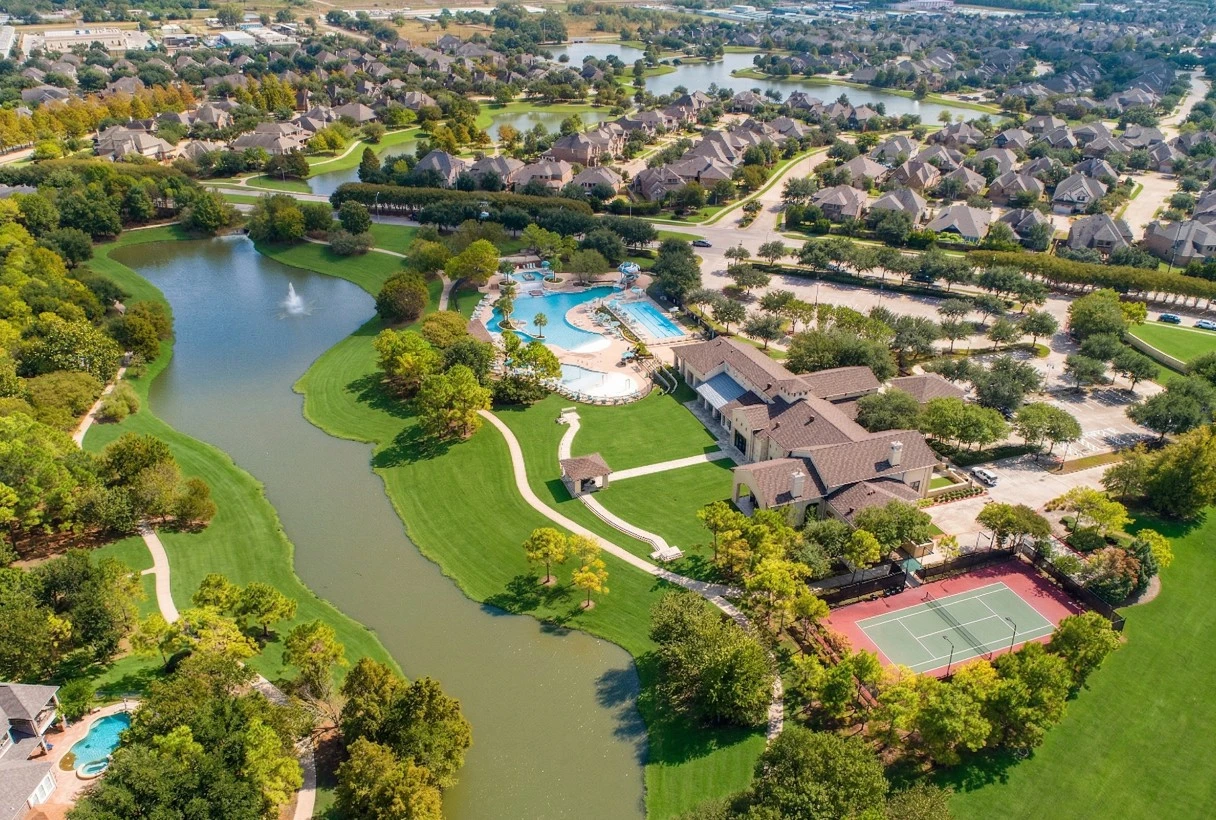
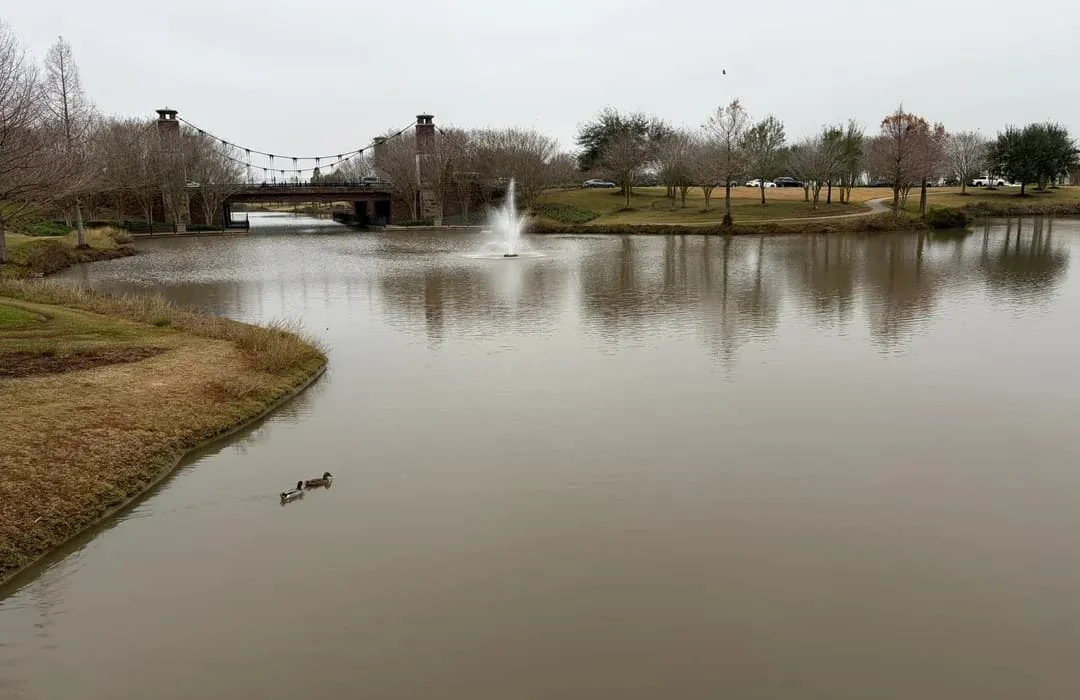
The developer describes a lake system of about 70 acres, several hundred acres of open space, walking and biking trails, two pool complexes and a community center of about 9,000 square feet. Arched bridges, brick details and landscaped entrances repeat the visual theme across the community. The result is easy to recognize: houses face not only streets, but also water edges, green space and shared paths.


The association’s current new-homeowner page lists Central Hall for private rentals and community events, multiple seasonal pools, a gym, basketball, volleyball, tennis and pickleball courts, playgrounds and parks. These are shared facilities, not proof that every home has the same access route or fee. Hours, keys, booking rules and fees still need to be checked for the exact property. See the association’s new-homeowner amenities list.
What “walkable” means here
Telfair’s walkable design mainly means internal pedestrian access. Many routes connect homes with lakes, parks, paths and the central recreation area. That can make a morning walk or a bike ride part of daily life without getting into a car.
It does not mean every errand is within walking distance. Grocery stores, schools, jobs and major shops may require a car or bus. A path to a park is different from a continuous sidewalk route to a supermarket. When comparing locations, walk the exact route from the exact home at the time of day you plan to use it.
How the land developed
The ground under and near Telfair has a much older history than the present streets. The Texas Historical Commission records the site’s connection to the Central State Farm, a Texas prison facility built on land with roots in a late-1800s sugar plantation worked by convict labor.
According to the Commission’s marker record, the State bought the plantation in 1908 and renamed it the Imperial State Prison Farm. Construction of the new Central State Farm facilities began in 1930. The main building was completed in 1932 and later became a Recorded Texas Historic Landmark. Its Art Moderne design used reinforced concrete and included a square tower, stepped corners and metal windows.
That history affects the present community in a visible way. The developer donated the historic prison building for the Houston Museum of Natural Science at Sugar Land. A preserved civic building therefore sits close to Telfair’s central area instead of being replaced by another subdivision street.
Development dates describe different milestones
Public sources do not all use the same date because they are describing different steps. One project account dates development from 2004 onward. Contemporaneous reporting says construction started in 2005. The developer lists 2006 as the year Telfair opened and 2014 as the year it sold out.
A simple way to understand the timeline is: planning and early work began in the first half of the 2000s, homes opened in 2006, and the original development reached its recorded sell-out in 2014. A buyer today is therefore usually shopping resale homes rather than choosing a new lot from an original builder.
Homes and meaningful smaller areas
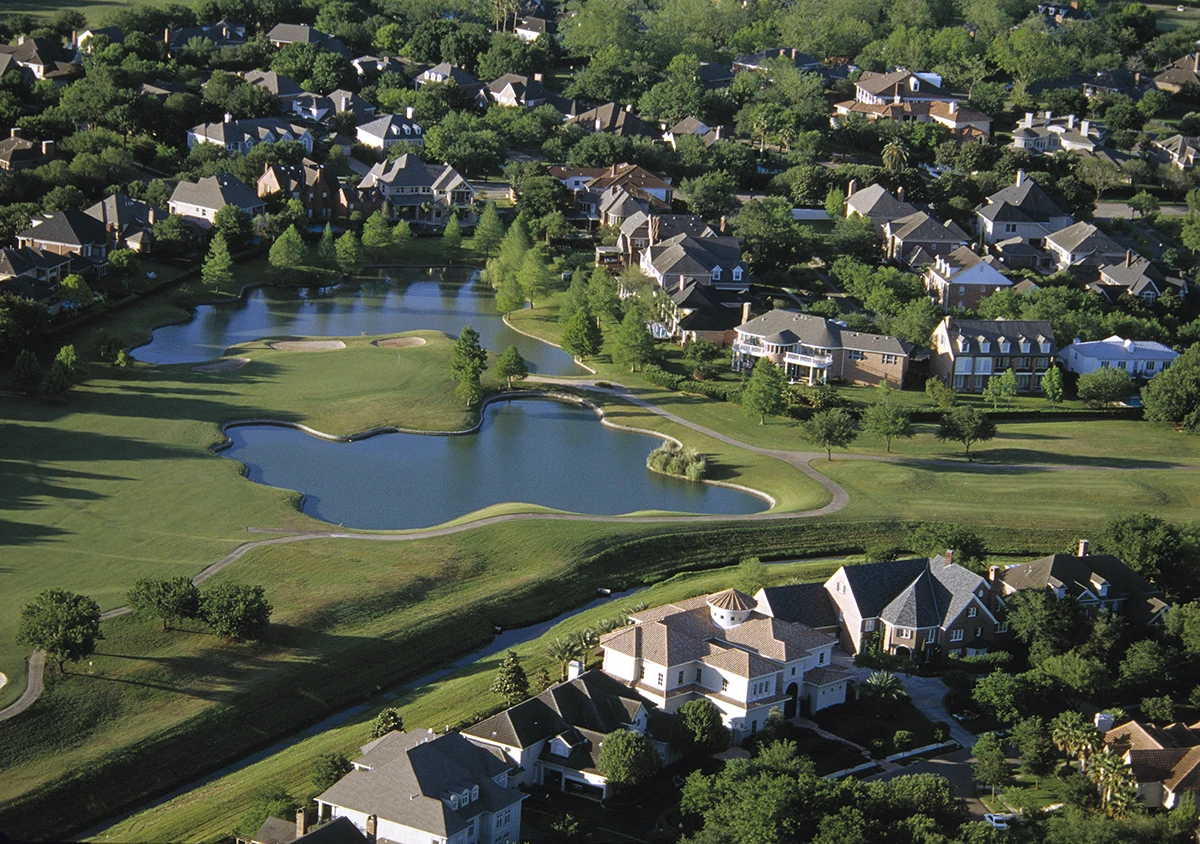
Telfair is not one uniform housing product. Its documented housing range includes traditional and custom homes, townhomes and patio homes. The homes were built by several builders, so roof lines, floor plans, garages, exterior materials and lot shapes can change from street to street.
| Home type | What it can mean | What to verify |
|---|---|---|
| Traditional or custom single-family home | A detached home with the widest range of layouts, lots, garages and exterior styles. | Exact section, lot position, exterior rules, roof and systems, flood information and the full tax stack. |
| Patio home | Often positioned as a smaller-lot or lower-maintenance choice, sometimes with front-yard care handled by an association. | Which maintenance tasks are included, which association applies, assessment amount, parking rules and private outdoor space. |
| Townhome | A home that may share one or more walls and can divide exterior or common-area care differently from a detached house. | Ownership form, deed, governing documents, insurance responsibility, assessment, resale certificate and lending rules. |

Why section records matter
The City of Sugar Land’s subdivision GIS layer returns 39 Telfair records. They cover numbered sections 1 through 35, with some sections split into A and B records. The same layer names sections 24 through 27 as Telfair at Avalon. All of the returned records are marked as inside the city limits.
| City GIS record group | What the record shows | What it does not prove |
|---|---|---|
| Telfair Sections 1–23, including 15A/15B | Numbered residential subdivision records listed under “TELFAIR” in the City layer. | It does not prove a school, MUD rate, HOA assessment, flood zone, home style or amenity rule for an individual address. |
| Telfair at Avalon Sections 24–27, including 25A/25B and 27A/27B | The City layer uses the separate subdivision name “TELFAIR AT AVALON.” | It does not prove that listings, deeds, association records, MUDs and schools all use the same label. |
| Telfair Sections 28–35, including 29A/29B | More numbered records listed under “TELFAIR,” all marked inside Sugar Land city limits. | A section number alone cannot establish taxes, schools, fees, flood status or the condition of a home. |
The City’s planned-development list adds another layer. It includes records such as Telfair Central, Crossing at Telfair, Telfair Central Commercial and Telfair West Commercial. Planned-development records can govern how a particular tract is used. They should not be confused with the numbered residential sections.
For a specific property, start with the full street address. Then check the plat or subdivision record, appraisal parcel, zoning information, HOA documents, MUD, school locator and flood resources. The section name on a listing is a clue, not the final answer.
Service names can differ too. The City layer says “Telfair at Avalon,” while the association’s new-homeowner page says “Avalon at Telfair” when giving a different trash-day schedule. That may be only a naming and service difference, but it shows why the exact address and current service notice matter more than a shorthand label.
Everyday life, recreation and nearby places
Daily life in Telfair centers on the shared spaces created by the master plan. Residents can use connected paths and water edges, neighborhood parks, playgrounds, pools, the fitness room, tennis courts and event halls. The central recreation building gives the community a place for meetings, classes, resident activities and private events.
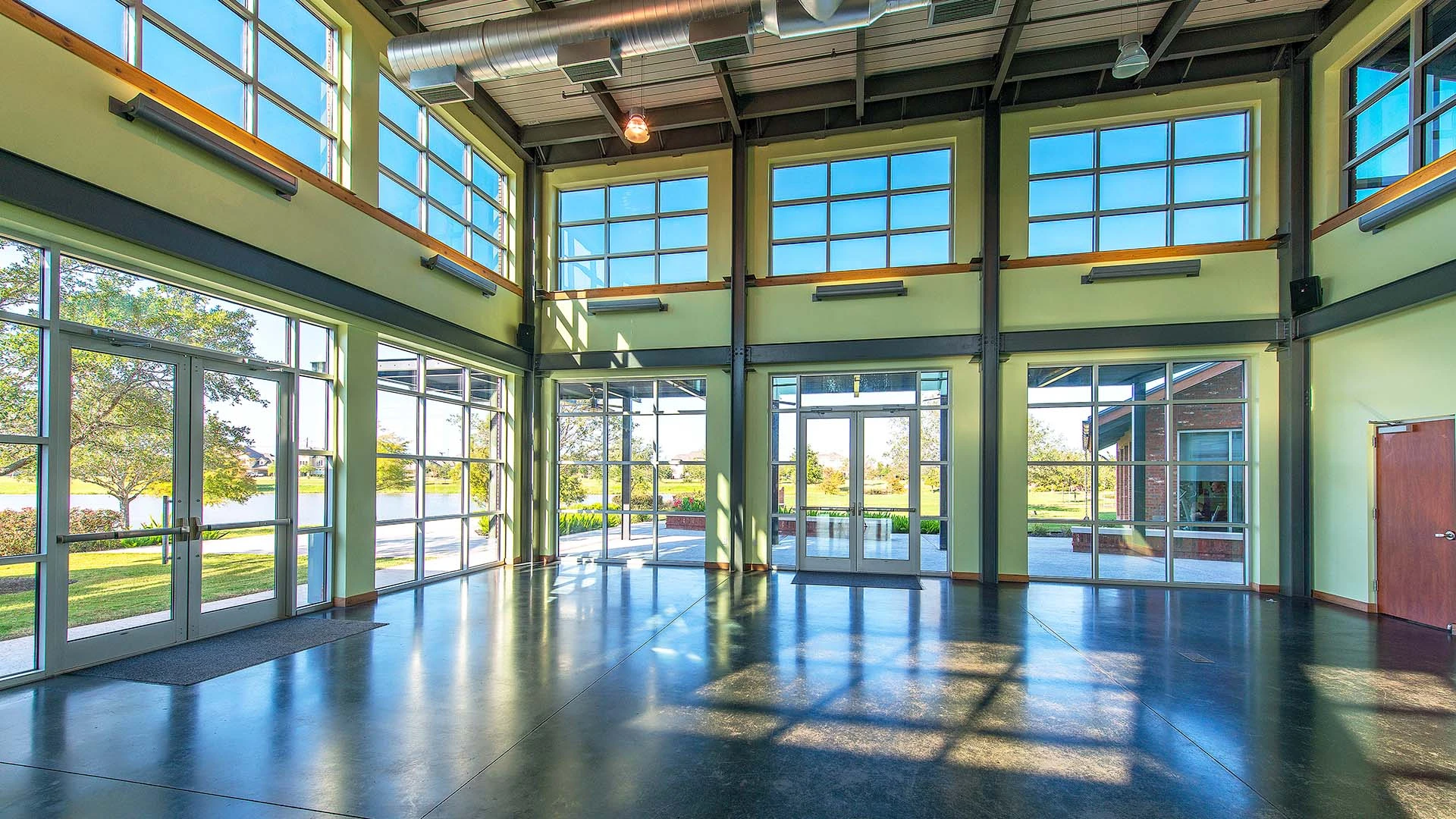


The association also communicates community news and events through its resident platform. Events and booking rules can change, so check the association’s current notices instead of relying on an old event list.
Community amenities are not the same as city amenities
Telfair’s association amenities and Sugar Land’s public parks are separate resources. Citywide, Sugar Land says it maintains 27 parks, three special-use facilities and more than 35 miles of hike and bike trails. Those city numbers describe the whole city, not the number of trails or parks inside Telfair.
The Houston Museum of Natural Science at Sugar Land is close to the community’s historic central site. The University of Houston at Sugar Land is near University Boulevard to the south. Smart Financial Centre and Sugar Land Town Square are useful destinations to the east and southeast, but they are outside the residential community.
Groceries, restaurants and everyday services are available in the wider Sugar Land area. The practical choice is usually a short drive, not a single walk from every home. Check the actual route from the property, including road crossings, sidewalks and street lighting.
Citywide park and trail figures: City of Sugar Land Parks and Trails.
Schools, MUDs and other address checks
Neighborhood-wide answers are not enough for these issues. School attendance, MUD taxes, flood information, association obligations and even the legal subdivision label can change from one address to the next. Use the full street address and the correct school year.
School attendance zones
Many public guides associate Telfair with Cornerstone Elementary, Sartartia Middle School and Clements High School. That may be a useful starting point for a map search, but it is not a guarantee for a particular home.
Fort Bend Independent School District provides an address-based school locator. For the 2026–2027 school year, the district instructs readers to enter the house address to find the attendance boundary. The district also says its maps are a guide, people near a boundary should verify the address, and final student placement is determined by the campus registrar.
FBISD has also approved secondary-school changes for 2027–2028. A feeder path that applies this year may not be the right one for a future school year. Search by address, note the year shown, and ask the registrar to confirm the result when the home sits close to a boundary.
Official tools: FBISD 2026–2027 School Locator,district maps and feeders, andboundary-planning updates.
Municipal Utility Districts, or MUDs
A Municipal Utility District is a local government district created to provide certain water, sewer or drainage services. It can pay for that infrastructure by charging a property tax. Your tax bill may therefore include a city, school district, county and one or more special districts. A MUD rate is usually written as an amount for each $100 of taxable property value.
The Telfair MUD website lists four county MUDs. Its 2025 rate post is a useful example of why the exact parcel matters: the four districts did not have the same rate.
| District | 2025 posted rate | How to use it |
|---|---|---|
| FBCMUD 136 | $0.345 per $100 | Confirm the parcel’s current district and adopted rate. Check the appraisal district, tax records and the district’s latest notice before building a budget. |
| FBCMUD 137 | $0.17 per $100 | |
| FBCMUD 138 | $0.21 per $100 | |
| FBCMUD 139 | $0.24 per $100 |
Source: Telfair MUDs 2025 property tax rates, published October 10, 2025. Rates and district boundaries can change.
Flood, drainage and insurance
The Telfair MUD website also lists Fort Bend County Levee Improvement District 17. That tells you a special drainage or protection district may be relevant, but it does not tell you whether a particular home is inside a flood zone or what an insurer will charge.
For an exact property, check the current flood map, the parcel’s drainage or levee district, the seller’s disclosure, elevation or flood-history information if available, and insurance quotes. A lake, greenbelt or levee should never be treated as a promise that water cannot affect a property.
HOA and resale-document checks
The Telfair Community Association’s current FAQ says homeowners maintain their units while the association maintains common areas, amenities, event lawns, medians, common fences and walls, playgrounds, pools, fitness facilities and monuments.
The same FAQ says exterior changes should go through architectural review and that the volunteer committee may take up to 30 days to respond. It lists annual assessments due January 1, with installments on December 1, January 1 and February 1. These are process examples, not a current fee quote.
The published rules also address rentals and parking. The FAQ says short-term rentals are not permitted and gives a minimum stay of 180 days or six months. It says overnight street parking is prohibited and that certain recreational, commercial or inoperable vehicles must be kept out of public view. Read the current governing documents and resale certificate before relying on any rule.
Section-specific service information can also appear outside the main FAQ. The association’s new-homeowner page lists regular trash on Mondays and Thursdays, but Tuesdays and Fridays for Avalon at Telfair. Treat that as a dated page example and confirm the current schedule before moving bins or planning around it.
Source: Telfair Community Association FAQs, accessed October 26, 2026. Governing documents, board rules, fees and dates can change.
One-address checklist
- Identify the legal record. Confirm the full address, plat or subdivision section, appraisal parcel and any planned-development name.
- Check schools for the correct year. Use the FBISD address locator and ask the campus registrar when the address is near a boundary.
- Find every tax district. Confirm the MUD, any levee/drainage district and the current adopted rates.
- Read the HOA documents. Get the current assessment, budget, rules, architectural process and any nested association obligation.
- Check flood and insurance. Review flood maps, disclosure history, drainage information and real insurance quotes.
- Inspect the property. Community amenities do not replace a home inspection, roof review or check of major systems.
What ownership involves
Living in a community with shared amenities means living with shared rules. The benefit is that common areas, pools, medians, fitness facilities and monuments have a maintenance plan. The tradeoff is that owners pay assessments and ask permission before making many exterior changes.
The work before a change
Before painting, replacing a fence, changing a front elevation, adding a structure or altering visible landscaping, submit an architectural request. Include drawings, colors, material samples and a clear description. The association FAQ says a complete application helps avoid delay and that committee review may take up to 30 days.
That timing matters when a seller plans exterior work or when a buyer wants to renovate soon after closing. Build the review period into the schedule instead of assuming same-week approval.
The work every year
Association assessments are collected annually in the current FAQ. The amount, due date, installment choices and any special assessment should come from the latest budget, resale certificate and association notice. Do not use an old article’s fee as a quote.
The buyer should also understand the division of maintenance. The association handles shared spaces; the homeowner handles the unit. Depending on the home type, that may include roofing, fencing, irrigation, drainage on the lot, exterior paint, trees and systems such as heating and cooling. Townhomes and patio homes can divide these duties differently, so the deed and governing documents control.
Resale paperwork
The association’s FAQ points sellers and lenders to resale certificates and lender questionnaires. A resale certificate can disclose current dues, budget information, rules, violations and other obligations. A lender questionnaire helps a mortgage company review the association. Order them early enough for review and closing deadlines.
Read for pending work, reserves, insurance, rule changes, architectural disputes and any special assessment. A low published base assessment is not the whole cost if the documents show another obligation.
Why people consider Telfair and what to weigh
Telfair’s strongest reasons for consideration come from its concrete design. The lake and trail network is not just a map label. The recreation center, pools, courts, playgrounds and event spaces give residents several ways to use shared space. Housing choice across detached, patio and townhome formats gives buyers more than one product to compare. Major roads nearby make the community easy to place within Sugar Land.
The tradeoffs are equally concrete. Architectural review can slow an exterior project. Annual assessments and special-district taxes add to the cost of ownership. Overnight parking limits can matter if a household has several cars or large vehicles. Section, school, MUD and flood questions require property-by-property checks. Resale homes can be well kept or may need updates, so condition matters more than a neighborhood average.
| Feature | Why it may help | What to weigh |
|---|---|---|
| Lakes, paths and parks | Supports walking, biking and time outdoors close to home. | Route quality, crossings, privacy, lot drainage, maintenance and insurance still vary by property. |
| Recreation and events | Pools, courts, fitness space and halls create shared activities. | Rules, hours, booking limits, current fees and actual access should be confirmed. |
| Several home formats | Buyers can compare detached, patio and townhome ownership. | Maintenance, insurance, parking and assessments can differ. |
| Road access | I-69/U.S. 59 and University Boulevard provide clear regional orientation. | Drive times change with traffic, and road access does not make every errand walkable. |
| Multiple sections | The community offers many streets, lot positions and home choices. | Schools, MUDs, records, fees and rules must be checked by full address. |
The best choice depends on the reader’s priorities. Someone who wants a short walk by water may value a trail-side lot. Someone who wants less exterior work may prefer a patio or townhome product with a clear maintenance agreement. Someone with a large vehicle or several drivers should read the parking rules first. These are feature-based decisions, not assumptions about who belongs in a neighborhood.
Buying and selling in Telfair
For buyers
Start with the exact property, not the neighborhood name. Confirm the legal section, MUD, school year, flood information, association and home condition. Then compare two or three homes using the same checks. A lake view, trail location or newer roof is useful information only when it is verified for that property.
Ask for the current governing documents, budget, assessment schedule, resale certificate, architectural rules, meeting minutes and any notice of planned work or special assessment. If a seller has changed the exterior, ask when approval was requested and whether it was granted.
Keep the big checks separate. The school locator answers attendance. The appraisal and tax records help identify taxing districts. The flood resources and insurance quotes address water risk. The inspection and repair negotiation address the house. One source should not stand in for the others.
For sellers
Order association documents early and make sure the current assessment and rules are accurate. If paint, fencing, landscaping or another exterior item is part of the preparation plan, submit the architectural request with enough detail. The association’s published review example can take up to 30 days, so the schedule should allow for questions or a resubmission.
Present school, MUD and section information as address-specific checks. Do not promise a permanent feeder school, a tax rate for next year or a neighborhood-wide flood result. Give buyers the official lookup links and the documents for the property.
Market prices, school ratings, commute times and transaction counts change too quickly for an evergreen guide. Leave those questions to current, dated and property-specific data rather than treating this guide as a market report.
Bring one full Telfair address. From it, you can map the legal section, school year, MUD, association documents, flood information and home condition. That is a more reliable starting point than searching only by “Telfair” or ZIP code.
Telfair frequently asked questions
Where is Telfair in Sugar Land?
Telfair is in Sugar Land, Fort Bend County, Texas. Its residential area is oriented around University Boulevard and lies west of I-69 / U.S. Highway 59. State Highway 6 is part of the broader road network farther east. The exact boundary should be checked with city and property records.
How big is Telfair, and why do acreage figures differ?
One description uses 750 acres for a residential portion. The association uses 2,018 acres, while the developer lists 2,019 total acres and separates commercial and open-space uses. The figures likely count different boundaries or land categories. Do not compare them without asking what each source includes.
What kinds of homes are in Telfair?
Telfair includes traditional and custom homes, townhomes and patio homes. Builders, floor plans, lots and exterior styles vary. Confirm the home type, ownership form, maintenance duty and association rules for the exact property.
What are Telfair sections and Telfair at Avalon?
They are legal subdivision-record names in the City of Sugar Land’s GIS data. The City lists numbered Telfair Sections 1 through 35, with some A/B splits, and names Sections 24 through 27 as Telfair at Avalon. A record name alone does not determine schools, taxes, fees or amenities.
What schools serve a Telfair address?
Many public guides list Cornerstone Elementary, Sartartia Middle and Clements High. That is not a guarantee. Enter the exact address in the FBISD school locator for the correct year, and ask the campus registrar when the property is near a boundary. FBISD says final placement is determined by the registrar.
What is a MUD, and why can rates differ?
A MUD is a local district that can provide water, sewer or drainage infrastructure and charge a property tax to pay for it. Telfair’s website lists four MUDs. Their adopted 2025 rates were different. Find the district for the exact parcel and check the current rate.
What HOA rules should a buyer check?
Check the current assessment, budget, architectural process, exterior-change approval, maintenance split, rental rules, parking, vehicle storage and any nested association. The association FAQ gives useful examples, but the current governing documents and resale certificate control.
Is Telfair walkable?
Telfair has internal paths, sidewalks, lakes and parks that support walking and biking inside the community. That is different from a claim that every grocery store, school or job is within walking distance. Test the exact route from the home you are considering.
What amenities are inside the community?
Published sources describe a lake and trail system, parks, two pool complexes, a central recreation center, a fitness room, tennis courts, play areas and event halls. Confirm current access, hours, fees and rules for the exact property.
What should I verify before making an offer?
Verify the legal section, school assignment for the right year, MUD and any levee or drainage district, flood information, HOA documents and fees, and the condition of the home. Then use official records for each item instead of relying on a listing description.
Sources used for this guide
- Telfair Community Association FAQs
- Telfair Association new-homeowner amenities
- Newland’s Telfair developer page
- City of Sugar Land planned-development districts
- City of Sugar Land planning maps
- City of Sugar Land subdivision GIS layer
- FBISD 2026–2027 School Locator
- FBISD 2026–2027 district maps and feeders
- Telfair MUD 2025 tax rates
- Texas Historical Commission Central State Farm record
- City of Sugar Land parks and trails
Thinking about a specific Telfair home? Start with Sonia Noman and the exact address. The useful conversation is not “Is Telfair good?” It is “What applies to this property, and what still needs to be checked?”Talk through your next step.